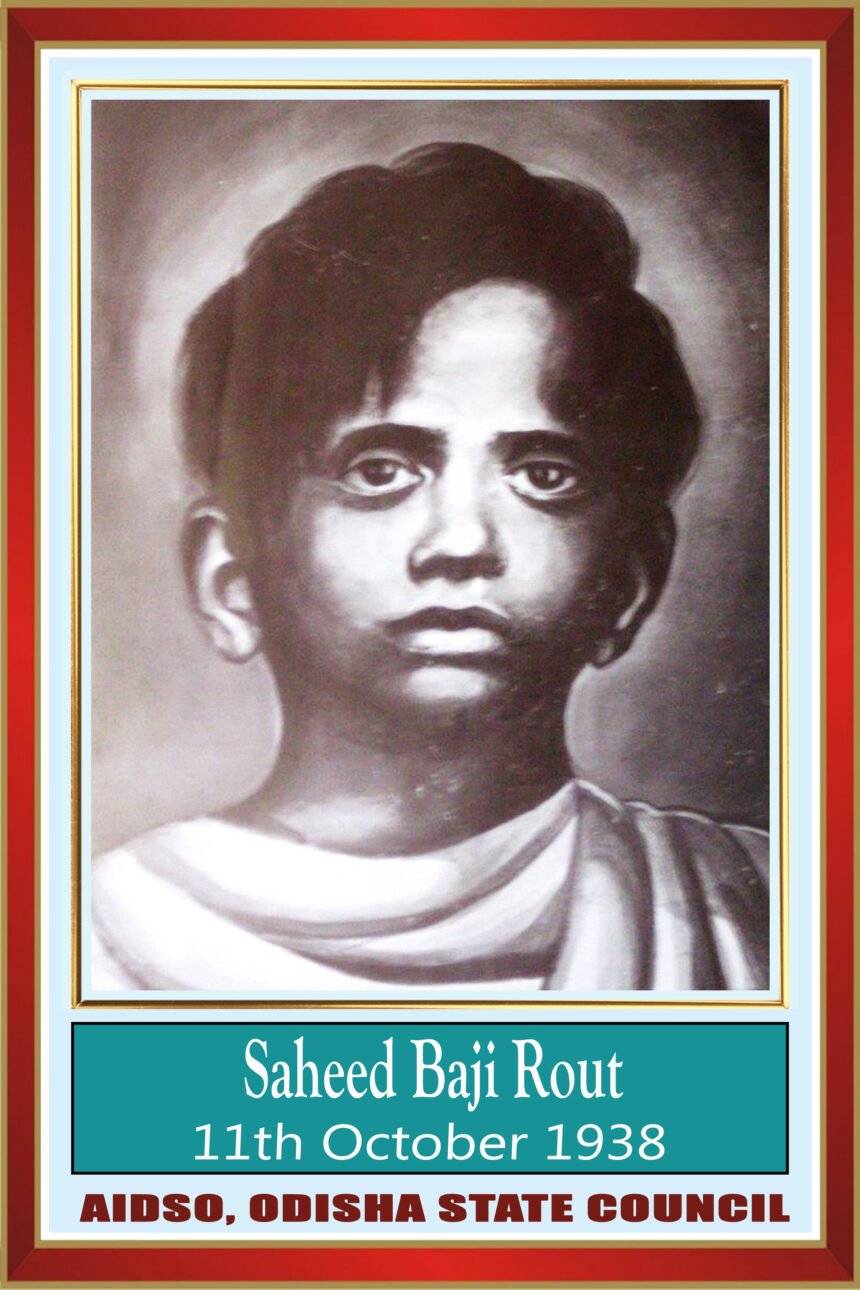
Dhenkanal, Odisha,10th October 2025 : On a moonlit night in October 1938, the still waters of the Brahmani River in Dhenkanal bore witness to a moment of immortal courage. A young boy, barely twelve, stood on the banks with unwavering resolve — his name was Baji Rout, the youngest known martyr of India’s freedom struggle.
Born in Nilakanthapur village, Baji was the son of a poor boatman. Like countless others in Odisha’s princely states, his family had suffered under both the local monarchy and the British Raj. But the spirit of rebellion was rising — the Praja Mandal Movement had taken root, demanding freedom from oppression.
That fateful night, British police officers, pursuing protesting villagers, reached the riverbank and ordered Baji to ferry them across. The boy looked at them, his small frame illuminated by the lantern in his hand. “No, I will not take you across,” he said.
His refusal was an act of pure defiance. When the police threatened him, he stood firm — guarding his boat, his pride, and his people’s dignity. In rage, the officers opened fire. The bullets struck Baji and his young companions, and his lantern fell into the dark waters — extinguishing its light, but kindling a fire in thousands of hearts.

News of the boy’s death spread like wildfire. Across Odisha and beyond, people mourned and rose in anger. Revolutionary poet Sachidananda Routray immortalized him in his powerful poem “Baji Rout”, which inspired generations to fight for justice and freedom.
Today, Baji Rout is remembered not just as a martyr, but as a symbol of youthful bravery — proof that courage knows no age. Every year, Odisha pays tribute to the boy who stood against tyranny with nothing but conviction in his heart and truth on his lips.
The river that once flowed quietly past Nilakanthapur still carries his story — of a child who dared to say “no” to an empire.